

Cavalleria rusticana | Pietro Mascagni
Performance paired with Pagliacci
A dazzling one-act opera, a journey into the psyche of a betrayed woman, consumed by rage and abandonment—feelings that awaken ancient, blood-soaked codes of honour. If Giovanni Verga’s eponymous novella has, over time, shaped the imagination of all Sicilian dramas of jealousy, this is also due to the music of Pietro Mascagni: direct, immediate, rough, with a special luminosity in evoking the landscape of the small town of Vizzini and a sudden violence in the eruption of passions. The emotional impact on the listener has endured since, to quote Sciascia, “the cry ‘they have killed compadre Turiddu’ for the first time sent a shiver down the spine of opera lovers.”
Born in 1890 as an entry for a competition held by the publishing house Sonzogno, Cavalleria rusticana achieved enormous success: its then-unknown composer became instantly famous, and the score attracted the interest of musicians such as Gustav Mahler. Here, musical verismo is born, an idiom Andrea Battistoni has explored for years as a sensitive interpreter on the podium, now as Music Director of the Teatro Regio. The role of Santuzza, one of the most compelling in the Italian repertoire, is entrusted to Ekaterina Semenchuk, one of the leading interpreters of the character on the world’s major stages. On stage is the first of four new productions in the Verismo project, which assigns Mascagni’s operas to Daniele Menghini and those of Leoncavallo to Francesco Micheli. Two generations of directors brought together to share the evening and the project.
Lecture-Concerto: Wednesday 14 October at 6 pm – Piccolo Regio Puccini
Melodrama in one act



Characters and cast

Ekaterina Semenchuk

Maria Teresa Leva

SeokJong Baek
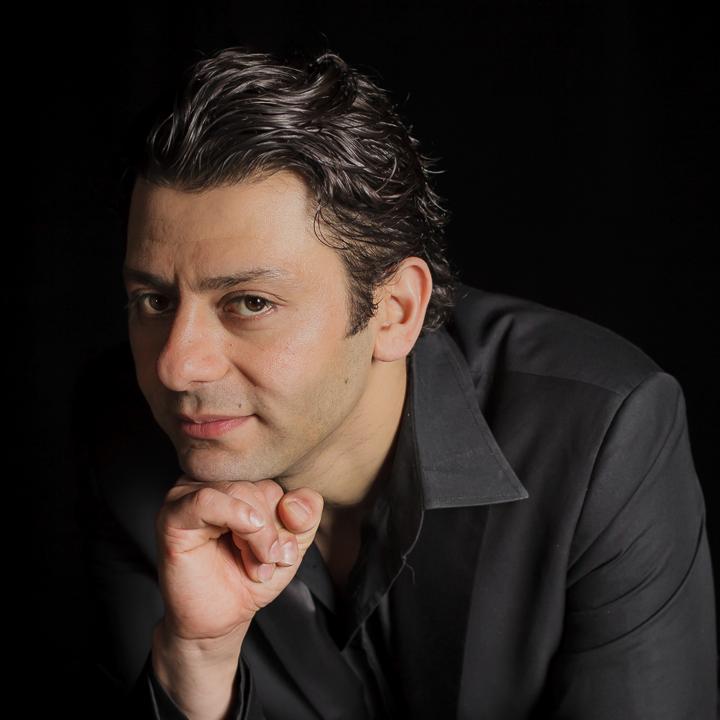
Amadi Lagha

Angelo Villari

Ariun Ganbaatar

Simone Piazzola

Elena Zilio

Agostina Smimmero

Veta Pilipenko

Maria Di Mauro

Daniela Valdenassi
Performances
Dress code: Black Tie
Synopsis
atto
It is Easter Sunday in a Sicilian village. Turiddu sings a serenade to Lola, with whom he spent the night while her husband, the well-off cart driver Alfio, was away.
The village square gradually comes to life. Santuzza, Turiddu’s fiancée, goes to greet her future mother-in-law Lucia, the local innkeeper. Lucia believes that Turiddu has not yet returned from a nearby town where he went to buy wine, and is perplexed to hear Santuzza say that the young man was seen in the village late at night. Alfio arrives, stops at the inn, and in casual conversation with Lucia mentions that he has seen Turiddu near his own house. Lucia is taken aback, but is silenced by Santuzza. Meanwhile, the villagers set off for the solemn Easter service. Everyone enters the church except Santuzza and Lucia, who asks the young woman why she signalled her to be quiet. Santuzza confides all her anguish to Lucia: Turiddu, who before leaving for military service was engaged to Lola, upon finding her married to Alfio had tried to forget her by starting another relationship; Santuzza had given in to him, and now that Lola and Turiddu love each other again she is a dishonoured woman with no prospects. Shaken, Lucia begs the Madonna to protect Santuzza, and heads to the church.
Santuzza confronts Turiddu: she reproaches him for his betrayal but is willing to forgive him. Turiddu, coldly, declares himself irritated by her jealousy. Lola then appears, heading to mass: she behaves provocatively toward Santuzza. After Lola leaves, the confrontation between Santuzza and Turiddu grows increasingly tense. Santuzza begs him not to abandon her, but Turiddu brusquely rejects her and takes refuge in the church. Santuzza curses him and collapses in anguish. Alfio appears shortly after: Santuzza, in a fit of rage, reveals his wife’s infidelity. Alfio promises revenge, and Santuzza realises she has acted irreparably rashly.
After mass, Turiddu invites the villagers for a toast. But when he offers Alfio a drink, the refusal clearly carries the meaning of a challenge. Turiddu, according to custom, accepts by embracing his rival and biting his ear. He acknowledges his wrongdoing and expresses concern for Santuzza’s fate should he lose; he then calls Mamma Lucia, asks for her blessing and her promise to take care of Santuzza, and, after kissing her affectionately, leaves to face the duel. Lucia, unaware of what has happened, is uneasy: Santuzza reaches her and embraces her to comfort her. Gradually the square fills: tension rises and the villagers exchange worried glances, until, in the distance, a woman is heard crying that Turiddu has been killed.